 Thoughts on Having a BFF and Integration Service
 1. What Each Layer Does
 1. What Each Layer Does
 BFF (Backend for Frontend)
A BFF acts as a thin API layer sitting directly between your frontend (web, mobile, etc.) and your backend microservices or integrations.
Main role:
-
Tailor responses specifically for a UI or client type.
-
Orchestrate multiple backend calls into one response.
-
Abstract complex backend logic from the frontend.
So your frontend never needs to know where the actual services live or how to talk to them — it just calls the BFF.
 Integration Service
This layer connects to:
-
Internal services
-
Third-party APIs
-
Legacy systems
It’s the plumbing — handling all those “talk-to-other-systems” jobs, so the BFF stays focused on presentation logic instead of integration complexity.
 2. Why This Architecture Makes Sense
| Benefit | Description |
|---|---|
 Separation of Concerns Separation of Concerns |
The BFF handles API orchestration & client formatting; the Integration layer handles all external or cross-domain system calls. |
 Frontend Simplicity Frontend Simplicity |
Your UI only knows one endpoint — the BFF. It doesn’t care about API versions or microservice changes. |
 Security and Control Security and Control |
You can handle auth, rate limiting, and request validation centrally in the BFF. |
 Consistency in Data Contracts Consistency in Data Contracts |
All frontend calls pass through one format; easier to maintain, log, and evolve. |
 Scalability and Maintainability Scalability and Maintainability |
Integration layer can be reused by multiple BFFs (e.g., WebBFF, MobileBFF). |
 Reduced Frontend Coupling Reduced Frontend Coupling |
Frontend doesn’t break if backend API contracts change; BFF adapts. |
3. About the Reusable HTTP Method
Having a reusable HTTP method where you send the method, object, headers — and make all calls to the BFF a POST method instead of GET/PUT — then let the BFF/Intergration handle the rest.
E.g:



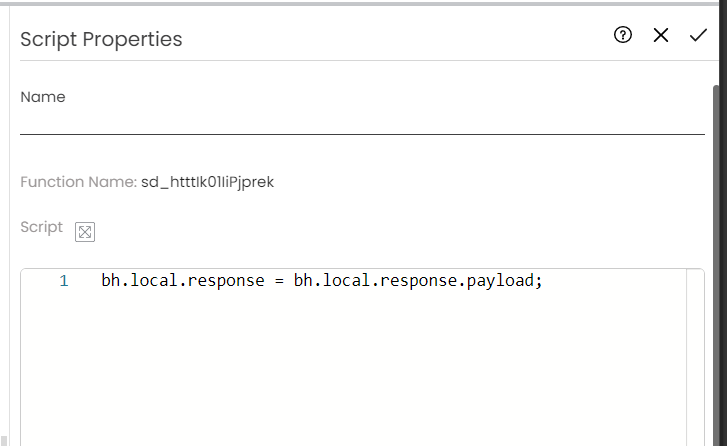
This helps with API response standardization.
Centralized Request Handling
-
All HTTP headers, authentication, retries, and error formatting happen in one place.
Network & Security Benefits
-
You can keep everything behind a single endpoint (less surface area exposed).
-
POST requests are less likely to be cached or intercepted by browsers/CDNs compared to GETs — useful for sensitive business operations.
Cleaner Integration Layer
-
The BFF becomes the “traffic controller” between your UI and backend services.
-
You can easily add new backend integrations or modify existing ones without impacting
 4. Real-World Benefits You’d See
 4. Real-World Benefits You’d See
-
 Cleaner API boundaries between frontend and backend.
 -
 Easier to replace or refactor backend services without breaking UI.
 -
 Centralized security and logging.
 -
 Reusable HTTP call utility across multiple apps (e.g., Web & Mobile).
 Cleaner API boundaries between frontend and backend.
 Easier to replace or refactor backend services without breaking UI.
 Takeaway
 Takeaway
A BFF + Integration Service setup creates a modular, future-proof architecture.
Thanks for reading the post.
How are you doing the services in your project?? ….Looking forward to hearing from you 